Apiculus anthocyanin colouration in rice (lemma tip)
Rice apiculus colouration is a distinctive morphological trait whose anthocyanin hues ranges from pink and reddish purple to purple and purplish black. One of my colleagues, Manuela, and I recently had to make many field observations of this characteristic and instinctively noticed that most of these hues seemed to be variations of the same underlying pigment rather than actual different colours. I therefore wanted to know whether that intuition was correct.
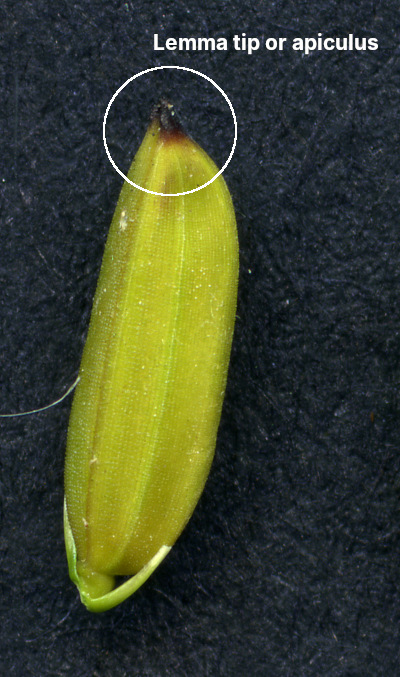
Figure 1: The apiculus, i.e. the lemma tip, sometimes presents anthocyanin colourations.
The current (2026) UPOV Test Guidelines (International Union for the Protection of New Varieties of Plants, 2020) for rice specify six possible states of expression for this characteristic: white (1), yellowish (2), red (3), purple (4), brown (5), and black (6), which are not easy to assess in the field, especially without a reference.
Several studies from the 1950s and 1960s investigated the pigments responsible for anthocyanin colouration of the rice apiculus. Nagao, Takahashi, & Miyamoto (1956) compared anthocyanins from rice plants carrying different colour-gene combinations and producing different hues. They found no qualitative differences among the anthocyanins and identified cyanidin as the common aglycone after hydrolysis.
Mizushima, Kondo, & Konno (1963) later showed that apiculus anthocyanin consists predominantly of two cyanidin glycosides, cyanidin 3-O-glucoside and cyanidin 3-O-rutinoside , with only minor amounts of other pigments. Their chromatographic results also linked apiculus colour to pigment abundance. Darker purple genotypes generally contained substantial amounts of both chrysanthemin and keracyanin, whereas some redder genotypes showed a marked reduction in keracyanin (Table 1). Differences in colour therefore appear to reflect primarily the amount of anthocyanin accumulated, with the relative proportions of the two principal cyanidin glycosides also contributing in some genotypes (Mizushima et al., 1963).
| Apiculus colour | Genotype | Chrysanthemin | Keracyanin |
|---|---|---|---|
| Blackish purple | \( C^B A \) | high | high |
| Blackish purple | \( C^B_1 C^B_2 A \) | high | high |
| Reddish purple | \( C^{Bp} A \) | high | high |
| Pink A | \( C^B A^d \) | lower | lower |
| Pink A | \( C^{Bp} A^d \) | lower | lower |
| Pink B | \( C^{Br} A \) | high | very low |
The pigment chemistry is therefore comparatively simple, but its genetic control is more complex. At the molecular level, apiculus pigmentation is regulated by a small network of genes controlling whether and how strongly anthocyanin biosynthesis is activated. The R2R3-MYB transcription factor OsC1 interacts with the apiculus-specific bHLH factor OsPa to activate anthocyanin biosynthetic genes, including OsDFR, which encodes dihydroflavonol 4-reductase (Meng et al., 2021).
The non-anthocyanin colour classes have a different basis. White or yellowish apiculi accumulate little or no anthocyanin, leaving the colour of the underlying tissue and other non-anthocyanin pigments visible. Brown apiculi occurs when the anthocyanin pathway is activated but interrupted before anthocyanin formation. In particular, loss of functional OsDFR produces a brown phenotype, probably through the accumulation of upstream flavonoid products (Meng et al., 2021).
We currently have all the example varieties listed in the third and fourth revision of the “Protocol for Tests on Distinctness, Uniformity and Stability for Rice” (Community Plant Variety Office, 2015) growing in the field, at the recommended stage for observing this characteristic. The fourth revision of the CPVO technical protcol is based on the UPOV TG/16/9 (International Union for the Protection of New Varieties of Plants, 2020), but provides example varieties better suited for cultivation in Europe. We collected samples from each example variety and photographed them with a high-resolution scanner (Figures 2 and 3]).
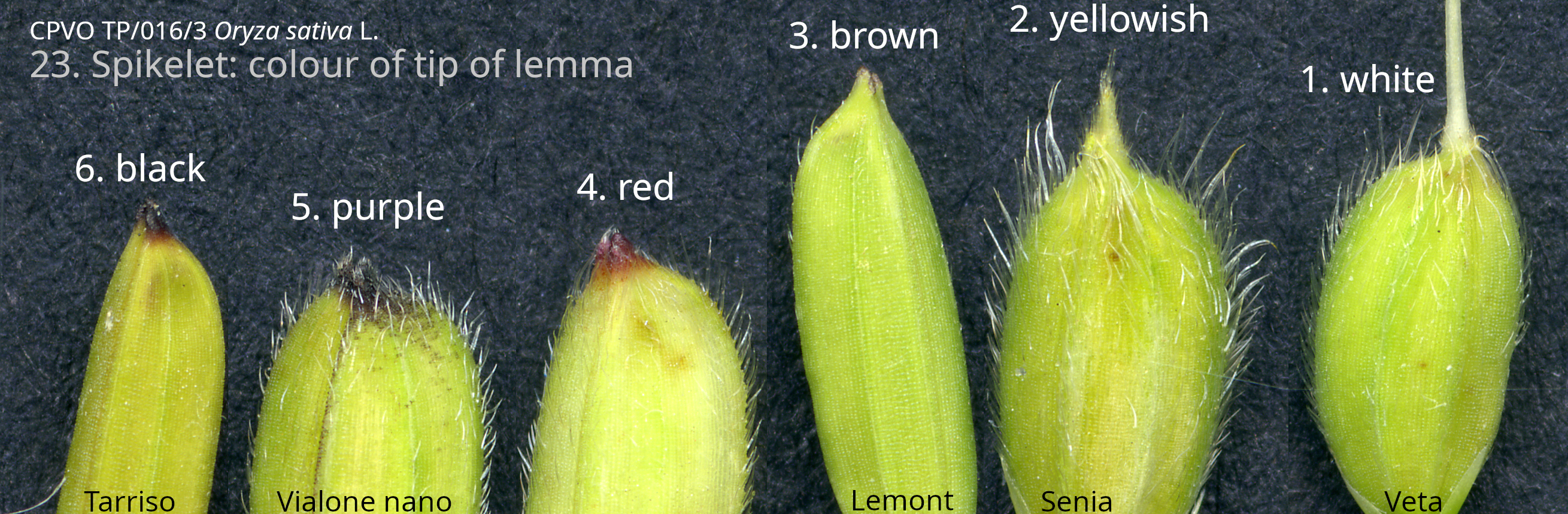
Figure 2: Lemma tip colour in the example varieties listed in revision three of the CPVO rice protocol.
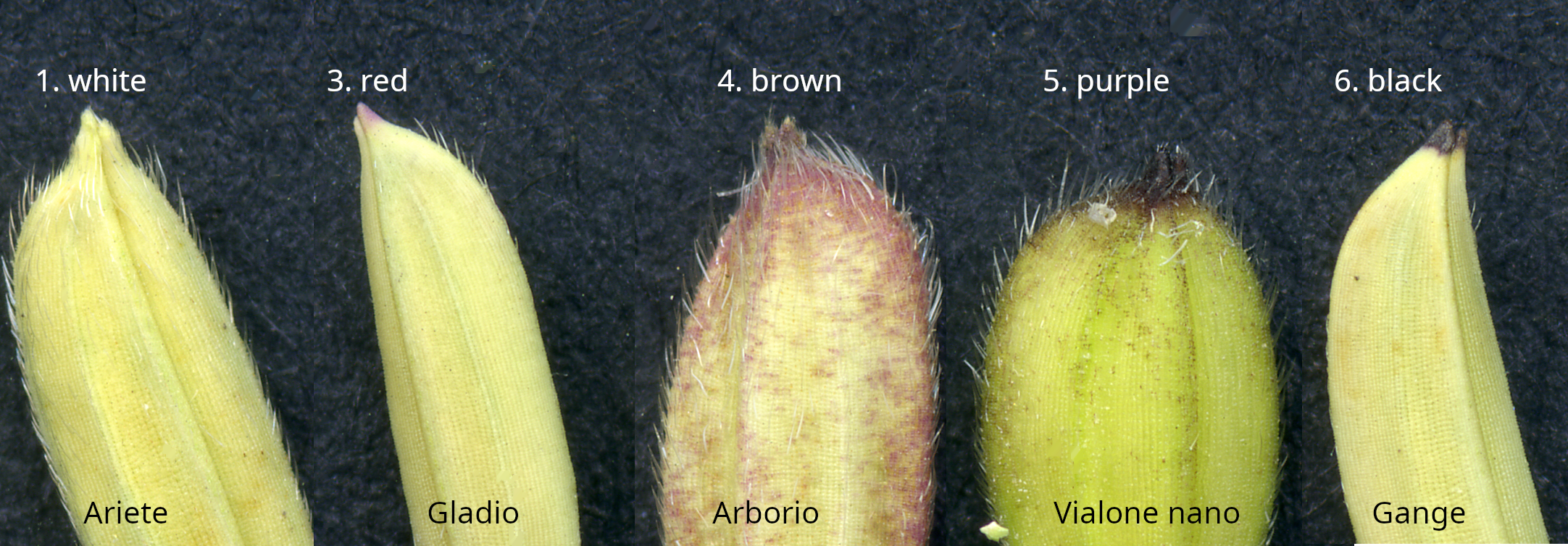
Figure 3: Lemma tip colour in the example varieties listed in revision four of the CPVO rice protocol.
Revision three of the protocol has now been superseded and from next season we will start using revision four. The new revision changes the example varieties for this characteristic, except for purple. I’d say that the example varieties provided by revision four are far better.